Read Four Disc Flight Numbers Without Treating Them as a Score
Four numbers on a disc can look like a performance score, with the largest set appearing best. They describe different aspects of intended flight within a manufacturer’s system. Reading the label carefully helps you ask a better equipment question without predicting exactly how your next throw will behave.
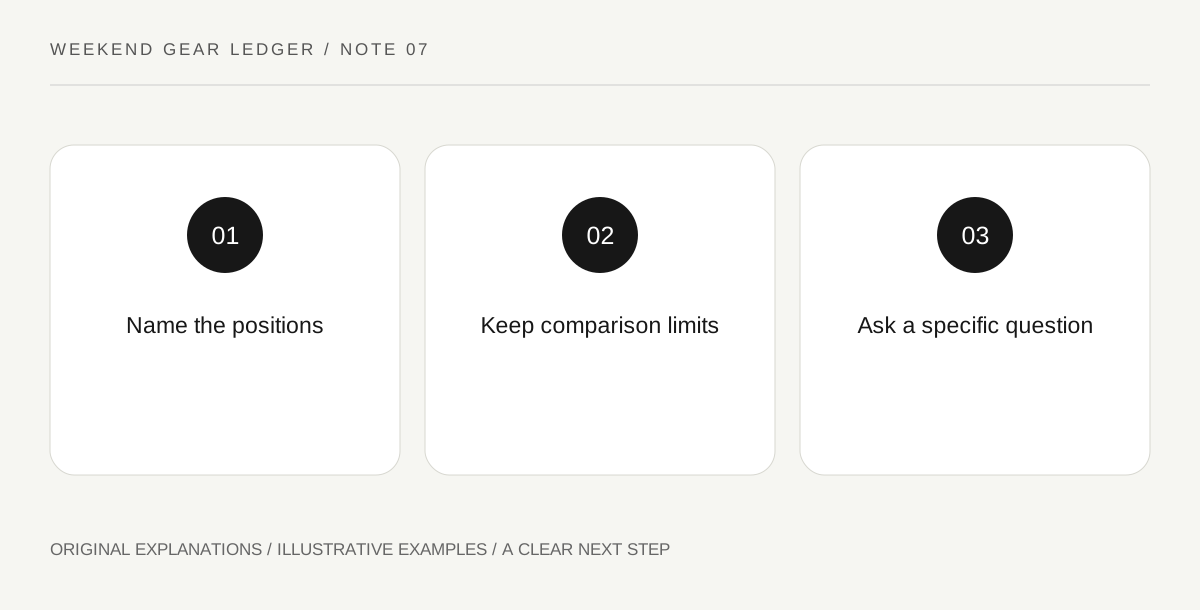
Original explanatory diagram. Read the full method and limitations below.
Name each position before comparing
Innova describes its four positions as speed, glide, turn and fade. Those labels have different meanings; they are not four interchangeable measures of quality. Copy the position names beside an unfamiliar number string before browsing more models. Keep the manufacturer attached to the record, since a superficially similar label from another brand should not be assumed to use an identical calibration or comparison method.
Respect the system’s comparison limits
Innova cautions that the remaining characteristics should be compared within the same speed rating in its system. Its guidance also distinguishes intended flight from the exact path produced by a particular thrower. Treat those qualifications as part of the label, not fine print to discard. A table that sorts every disc by one column can hide the context needed to interpret the other columns.
Connect numbers to a question for instruction
Bring the label and your present equipment question to an instructor or knowledgeable session host. Describe what you are trying to understand, such as why two models with the same speed classification carry different remaining numbers. Avoid turning one frustrating throw into proof that the disc is wrong. A label cannot isolate technique, conditions, material and individual variation from a single outcome on a course.
Keep a comparison record with provenance
For a small shortlist, record brand, exact model, material description and the maker’s explanation page. Do not blend a retailer’s informal description with the official numbers without marking the difference. If you cannot explain why a second disc belongs in the comparison, leave it off for now. Useful equipment literacy can end with one understood label rather than a purchase or a new collection spreadsheet.
Illustrative worked example
Illustrative example: Morgan sees one disc with a larger first number and assumes it must be a beginner upgrade. Reading the maker’s explanation changes the question from which score is higher to what role the model serves. Morgan brings the current loan disc’s label to the next lesson and asks about comparable options. This is an example of interpreting packaging, not a flight test or a recommendation for either model.
Questions that come up
Does a higher speed number guarantee more distance?
No. A label is not a guarantee of your result, and Innova explicitly qualifies exact flight by factors including the thrower. Ask for suitable instruction rather than using one larger number as an upgrade rule.
Can I average all four numbers into a ranking?
That would combine different meanings into a made-up score. Keep the categories separate and state the equipment question first. A numerical average would add apparent precision without establishing why a disc fits your situation.
References and scope
These sources support the factual background. Examples and exercises are original illustrative teaching material. References do not imply endorsement.
- Innova: flight ratings system — Manufacturer meanings of speed, glide, turn and fade, with comparisons qualified by speed class.