Choose a Pickleball Ball by the Session’s Actual Specification
A bag of brightly coloured balls is easy to buy before learning what a group uses. Ask about the exact ball for your intended session first. Recording the model, permitted venue and replacement arrangement can prevent an otherwise inexpensive purchase from becoming a set that nobody in the group wants to use.
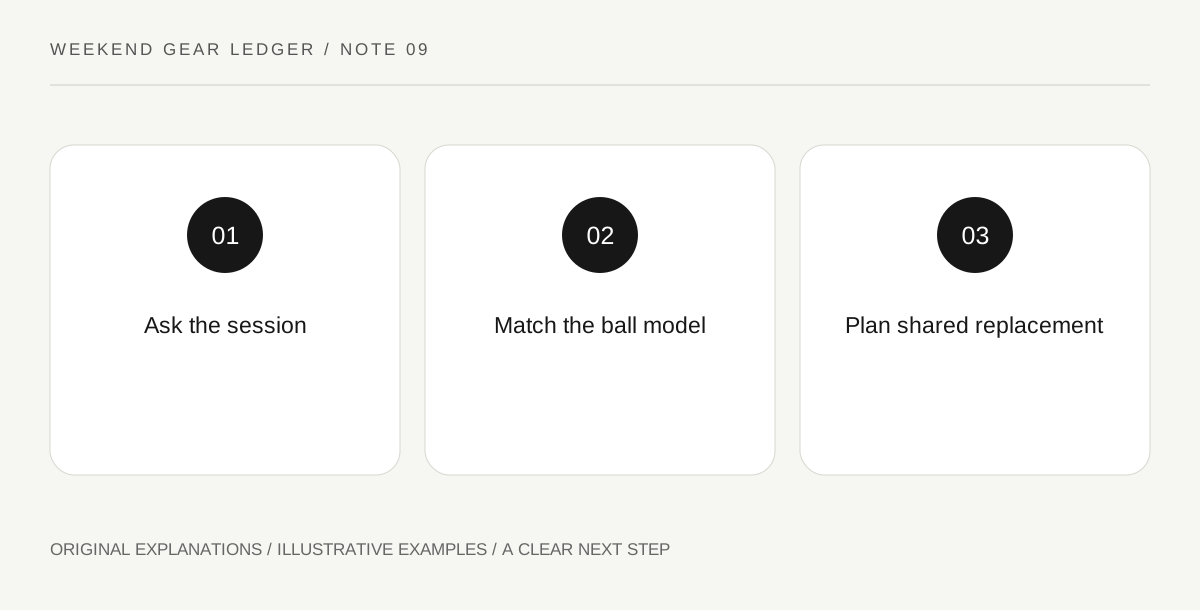
Original explanatory diagram. Read the full method and limitations below.
Ask for a model rather than a broad category
Contact the organizer through their published session information and ask which ball they supply or require. Keep their answer attached to that session and date. Labels such as indoor or outdoor can help describe a product family, but they do not identify every specification or local preference. Avoid turning a rule of thumb about appearance into a universal rule about all venues and all balls.
Use the appropriate official lookup
USA Pickleball maintains equipment information for balls as well as paddles. If approval is relevant to your event, look up the exact model in that part of the database and confirm the event’s requirements. Do not infer a ball’s status from the paddle brand used by the same player. A product name, approval record and organizer preference are three pieces of information that should remain distinguishable.
Work out who supplies replacements
For a recurring casual group, agree whether balls are pooled, individually supplied or included in a booking. Write down how a damaged or missing item is reported and who authorizes a replacement purchase. This small agreement prevents several people from buying incompatible duplicates. It also gives the group a chance to use what is already available before ordering a bulk pack merely because its unit price looks lower.
Inspect and store according to instructions
Before play, follow the host’s equipment checks and remove a suspect ball from use for their assessment. Keep any model packaging or care information available rather than guessing how the material should be cleaned or stored. A low purchase price does not justify continuing with visibly damaged equipment. Put the group’s usable stock back in its agreed container so the next organizer can see what remains.
Illustrative worked example
Illustrative example: A group has six usable balls of its agreed model and needs equipment for a beginner evening. One member proposes a large mixed bargain pack. The organizer confirms that the existing stock is sufficient and records a replacement trigger instead: buy the specified model when usable stock reaches the agreed minimum. The decision follows inventory and session needs, not a claim that one ball design is best for everyone.
Questions that come up
Can colour tell me which ball is required?
No. Colour alone does not establish model, approval or the organizer’s preference. Use the complete product identity and relevant session guidance rather than matching a photograph or buying the brightest pack.
Is a bulk pack always cheaper in practice?
Only compare it after confirming that the contents are usable for the intended sessions. Unwanted models, excessive storage and duplicated purchases can make a low unit price a poor answer to a small group’s actual need.
References and scope
These sources support the factual background. Examples and exercises are original illustrative teaching material. References do not imply endorsement.
- USA Pickleball: equipment database — Official model approval lookup for paddles and balls; approval is distinct from comfort and event entry.