Buy Badminton Shuttles After Asking What the Hall Uses
A beginner can arrive with a racket and still bring the wrong consumable for the session. Badminton shuttles differ in construction and specification, while groups may have their own supply arrangements. Ask the hall or instructor what the session uses before choosing a large tube based on price or packaging alone.
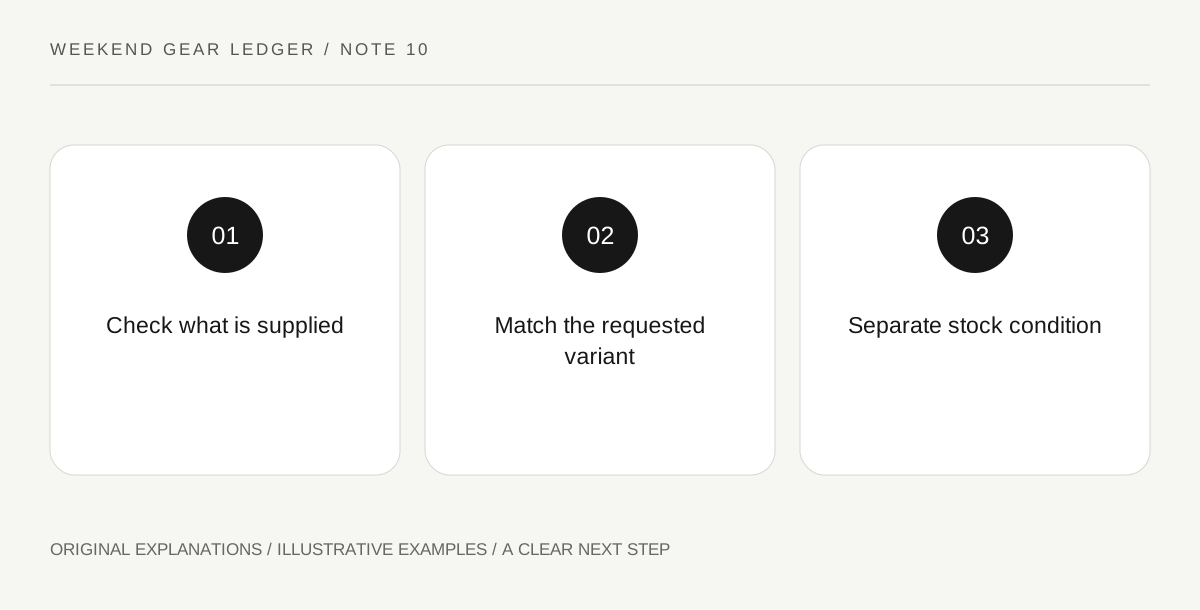
Original explanatory diagram. Read the full method and limitations below.
Separate construction from a quality ladder
BWF educational material distinguishes natural and synthetic shuttlecock categories. That distinction is a starting vocabulary, not proof that one unfamiliar tube is universally superior for every beginner. Record the construction, exact model and any speed designation given by the maker. Then ask which specification the venue expects. Do not translate a vague premium label into a claim about suitability for a particular hall or lesson.
Clarify what the booking includes
A coached session may supply shuttles, while an informal court booking may leave equipment to the players. Ask before adding a purchase to the plan. If the group provides them, learn how contributions or replacements are handled. Treat a stated supply arrangement as part of that particular booking rather than assuming every session at the same building operates identically. This avoids buying consumables that are already included.
Compare the complete tube description
When purchasing is needed, compare like with like: model, quantity and specification, together with delivery cost and seller conditions. A photograph of a tube may conceal the number inside or show a different variant from the selectable option. Save the actual selected description. Avoid buying a large stock until the group confirms that the exact specification works for its intended setting and format.
Keep used and unused stock distinct
Follow the instructor’s advice about inspecting and withdrawing worn shuttles. Give the group a clear place for new stock and a separate place for items awaiting assessment, so a used shuttle does not appear new merely because it has been returned to a tube. Store and handle them according to maker guidance. Do not improvise moisture or heat treatments copied from an unrelated product discussion.
Illustrative worked example
Illustrative example: Two friends book a beginner lesson and assume they each need a tube. The instructor explains that lesson shuttles are supplied; only the later independent court booking needs a shared supply. The friends record the hall’s requested model and split one suitable purchase for that booking. The result is a clearer plan, not evidence of a particular brand’s durability or a general recommendation about shuttle construction.
Questions that come up
Should I buy the most expensive construction immediately?
Choose for the actual session requirements and your spending limit. A higher-priced tube does not answer whether equipment is supplied or whether the selected variant matches the hall’s request.
Can I change the group’s shuttle without asking?
Discuss it first. A shared activity benefits from an agreed specification and replacement plan. Bring the complete product description to the organizer rather than assuming a superficially similar tube is interchangeable.
References and scope
These sources support the factual background. Examples and exercises are original illustrative teaching material. References do not imply endorsement.
- BWF: shuttlecock overview — Natural and synthetic shuttlecock categories, without assuming a particular venue uses either.