Block or Pad: Choose the Paper Binding for Your Painting Workflow
Two packs can contain similar watercolour paper yet behave differently when you begin and finish a painting. A block and a pad organize the sheets in different ways. Choose the binding by how you will support, dry and carry the work, rather than assuming a block is simply a more prestigious pad.
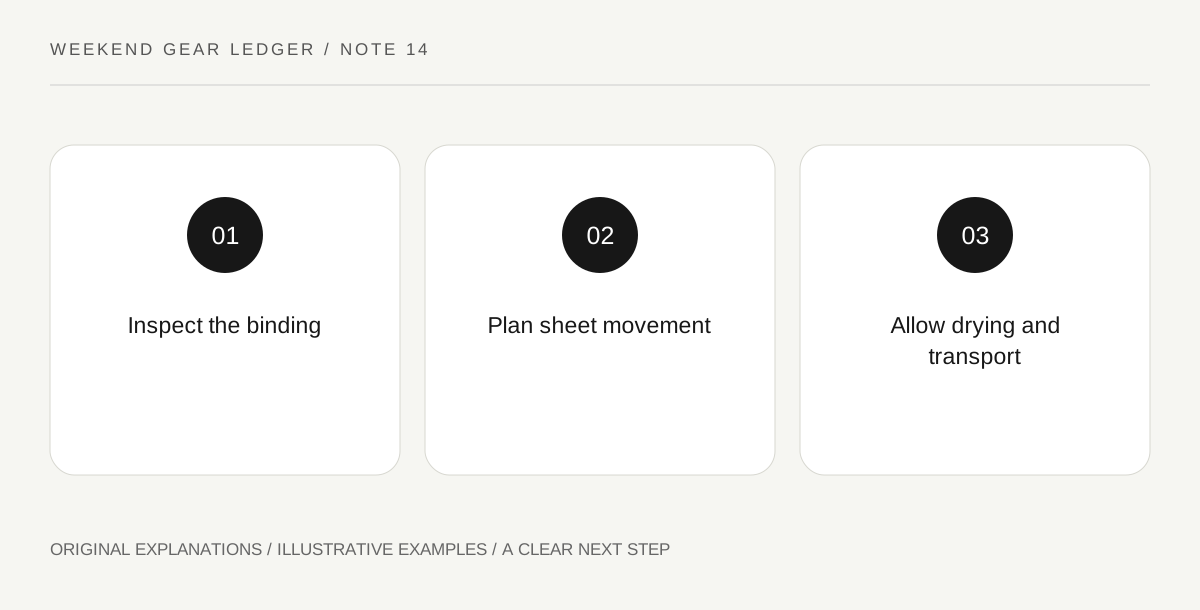
Original explanatory diagram. Read the full method and limitations below.
Inspect which edges hold the sheets
Arches describes its blocks as bound on four sides and its pads as bound on one side. That physical difference is the useful starting point. Look at the actual product instructions, including any protective cover sheet and the intended method of releasing finished work. Do not pry at an unfamiliar edge or introduce a sharp tool without understanding the maker’s procedure and appropriate safe handling.
Plan one painting or several studies
A block supports working on its top sheet while it remains attached. Arches advises leaving a completed painting on the block until dry. Consider whether your session involves one sustained picture or several separate studies that you want to arrange side by side. If you regularly move between multiple sheets, ask how a pad or separate supported sheets would fit that process. The choice is about workflow rather than status.
Account for the return journey
A portable format still needs a sensible way to carry unfinished or drying work without rubbing it against other equipment. Before leaving home, identify where the paper will sit and which objects could contact its surface. Do not stack another item onto wet paint just because the binding holds the edges. If the painting cannot be transported appropriately, shorten the activity or choose a dry drawing exercise for that outing.
Keep material comparisons separate from binding
If two packs differ in surface, grammage and size as well as binding, a preference after using them cannot be attributed only to block versus pad. Write the complete specifications beside your notes. Start with a format that suits your support and storage, then review how the binding helped or hindered the session. Avoid buying several unopened formats before you understand the first one’s intended use.
Illustrative worked example
Illustrative example: Mai plans three small colour studies that need to dry beside each other during an indoor class. A single block would keep the next sheet covered while the first remains attached. After asking the instructor, Mai chooses the supported separate-sheet arrangement used in that class. For a later single outdoor study, a block may be convenient. Neither format is declared universally better; the number and movement of studies determine the question.
Questions that come up
Can I remove a block painting while it is still wet?
Follow the maker’s instructions; Arches describes leaving its block painting attached until dry. Plan the session around that workflow instead of rushing release because another sheet is wanted.
Does every block contain the same paper?
No. Compare the stated paper properties and format independently of the binding. Similar packaging does not establish identical surface, grammage or dimensions, even when two products share a brand name.
References and scope
These sources support the factual background. Examples and exercises are original illustrative teaching material. References do not imply endorsement.
- Arches: block or pad — Four-side block binding and one-side pad binding; finished block paintings remain attached until dry.