Ask What a Cleanup Organizer Supplies Before Buying Volunteer Gear
An organized shoreline cleanup can be a useful first field project, but buying a branded volunteer kit is not the first requirement. Start with the organizer’s instructions for the actual site. Their supplied equipment, accepted participants and disposal arrangements determine what you need to bring and which jobs you should leave to trained people.
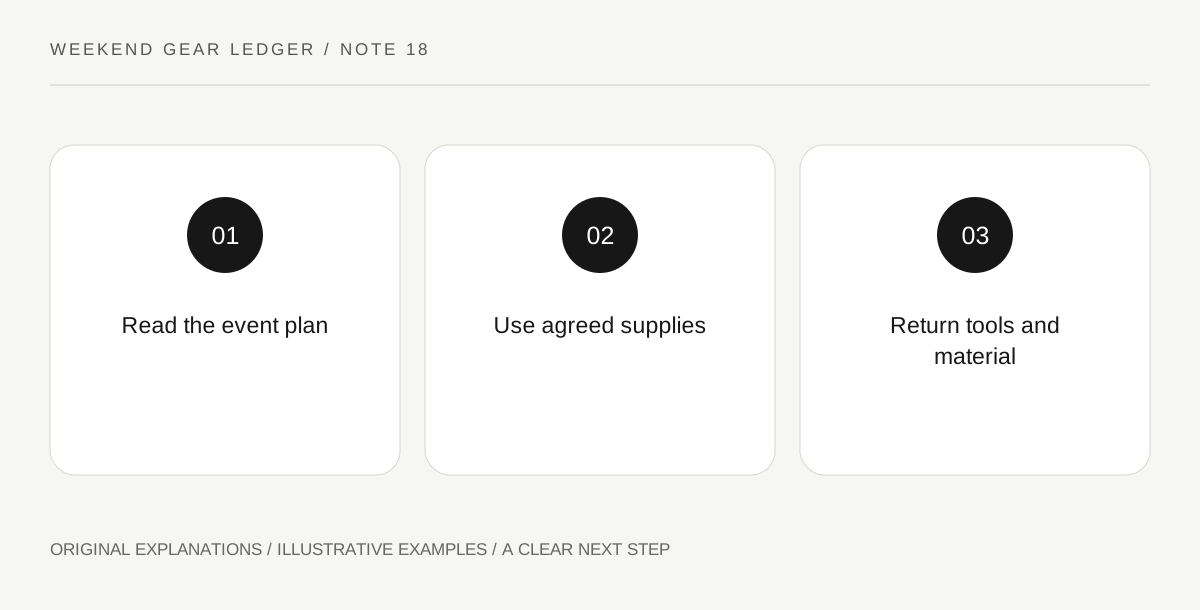
Original explanatory diagram. Read the full method and limitations below.
Get the site-specific instructions
NOAA’s cleanup preparation material emphasizes planning the site and resources. For a participant, that becomes a practical question list: where to meet, which area is authorized, what conditions change the plan, and what equipment is supplied. Read the organizer’s answer rather than adapting another beach’s checklist. A nearby shoreline may have different access, terrain or collection requirements despite looking similar in a photograph.
Separate issued tools from personal needs
Ask whether bags, gloves, litter tools or recording materials are provided and which personal clothing or footwear the organizer requires. Do not assume gloves make every object safe to handle. If the event supplies reusable tools, learn the check-out and return arrangement before buying duplicates. Bring personal day-out items suited to the announced conditions without adding equipment that would make you responsible for a specialist task.
Understand the sorting and collection point
A collected bag still needs the event’s approved route into disposal or recycling. Ask where participants bring material, what must remain separate and who checks unusual finds. Avoid making your own sorting rules from symbols on discarded objects; local arrangements and contamination can matter. If the organizer asks for counts or categories, use their form consistently rather than inventing a parallel classification halfway through the session.
Close the equipment loop
At the end, return reusable tools to the designated person and follow the event’s cleaning or separation process. Report damaged equipment rather than putting it back among usable supplies. Check that your own belongings and packaging leave with you. A clear return routine helps the next volunteer session start with an accurate inventory, which is a more useful contribution than purchasing an extra tool nobody has agreed to maintain.
Illustrative worked example
Illustrative example: Four friends register for an organized cleanup and consider ordering matching grabbers. The organizer already has loan tools and asks volunteers to bring specific footwear and their own drinking water. The friends follow that list, learn the collection categories and return the loan tools to the marked station. Their budget goes toward attending the event rather than duplicating issued equipment. This fictional plan does not certify conditions at any real shoreline.
Questions that come up
Should I bring a larger bag to collect more?
Ask the organizer. Collection size, handling and disposal are part of their site plan, and volume is not the only useful measure of participation. Follow the assigned task rather than maximizing an informal personal total.
Can I organize disposal after collecting?
The disposal route should be understood beforehand. If it is missing or unclear, ask the organizer before beginning. Moving litter into a bag without an appropriate destination does not complete the collection task.
References and scope
These sources support the factual background. Examples and exercises are original illustrative teaching material. References do not imply endorsement.
- NOAA: cleanup site preparation — Organized cleanup preparation, site choice and reusable supplies.
- NOAA: marine debris handling — Unknown and potentially hazardous items should not be touched or moved; report through appropriate local channels.