A Trackable Is a Travelling Game Piece, Not an Ordinary Souvenir
Small objects in a geocache can have different roles. A travelling trackable may look like a keyring or token, but it belongs to a game system with its own record and goal. Learn that distinction before adding trade items to your kit or taking an object home after a first find.
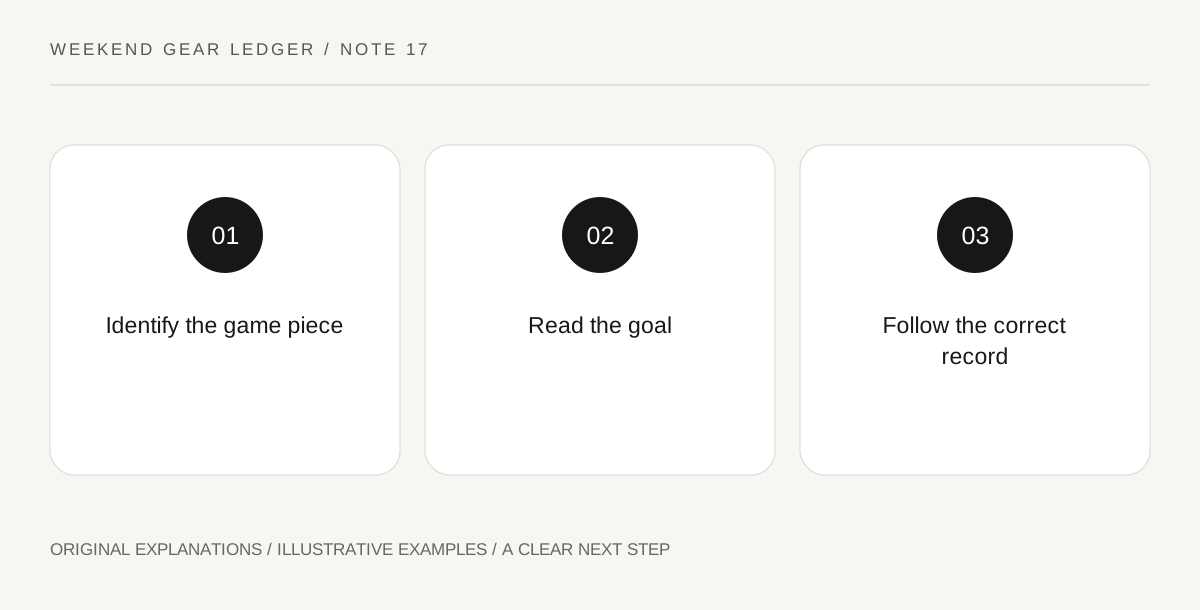
Original explanatory diagram. Read the full method and limitations below.
Identify the object’s role first
The official Geocaching trackables page describes game pieces that move between caches. If an item appears to have a tracking identity, consult the service’s instructions and its public item page before deciding what to do. Do not treat every small object as an unrestricted swap. Equally, do not assume an ordinary decorative token is a trackable merely because it resembles one in a photograph.
Read the goal before accepting responsibility
A trackable can have an owner’s stated travel goal or handling request. Read it and consider whether your realistic future outings can support that goal. If you are unsure, leaving it in place can be the responsible choice. Avoid taking a travelling item simply because you like its appearance or intend to learn the system much later. A good intention without a practical next step can interrupt the game.
Protect codes while making appropriate records
Follow the official logging process for the action you actually take. Do not publish tracking codes in general photographs or social posts. If you photograph a find for personal notes, inspect the image before sharing it. Keep the difference between visiting, discovering and moving an item clear according to the service’s current instructions rather than choosing whichever log option looks most celebratory.
Keep ordinary trade supplies separate
If you bring ordinary swaps, follow current official guidance and the cache’s requirements for appropriate contents. Do not mix food or scented items into a bag merely because they seem like friendly gifts. Keep any travelling item you are authorized to move distinct from personal possessions and swaps. A small clearly organized kit makes it easier to remember what needs an official next action when you return home.
Illustrative worked example
Illustrative example: Dani finds a tagged object whose page asks it to travel toward another region. Dani has no planned onward visit and is uncertain about logging. Instead of taking it as a keepsake, Dani reads the guidance and leaves it appropriately in place. A later outing can include moving a suitable trackable once the process is understood. The example illustrates a decision boundary, not a real item’s journey or an owner’s actual request.
Questions that come up
Is a trackable an ordinary equal-value swap?
No. Learn its specific game role and follow the official instructions. Its purpose is to participate in a recorded journey, which differs from exchanging ordinary permitted trinkets.
What if I already took one and am confused?
Read the official help and item page, and use the service’s appropriate support or owner-contact process if needed. Keep the item safe while resolving the next correct action rather than abandoning it or publicly exposing its code.
References and scope
These sources support the factual background. Examples and exercises are original illustrative teaching material. References do not imply endorsement.
- Geocaching: trackables — Trackables are game pieces that travel between caches, distinct from ordinary swaps.
- Geocaching: placement guidelines — Landowner permission is relevant to hiding; searching must still follow local access rules.