Set a Two-Session Hobby Budget Before Buying a Complete System
A new hobby often comes packaged as a complete equipment ecosystem. Instead of pricing the imagined expert version, budget two realistic beginner sessions. Include access, travel, consumables and any loan arrangements, then decide what you need to own. A small trial can reveal whether the enjoyable activity is the same one the advertising suggests.
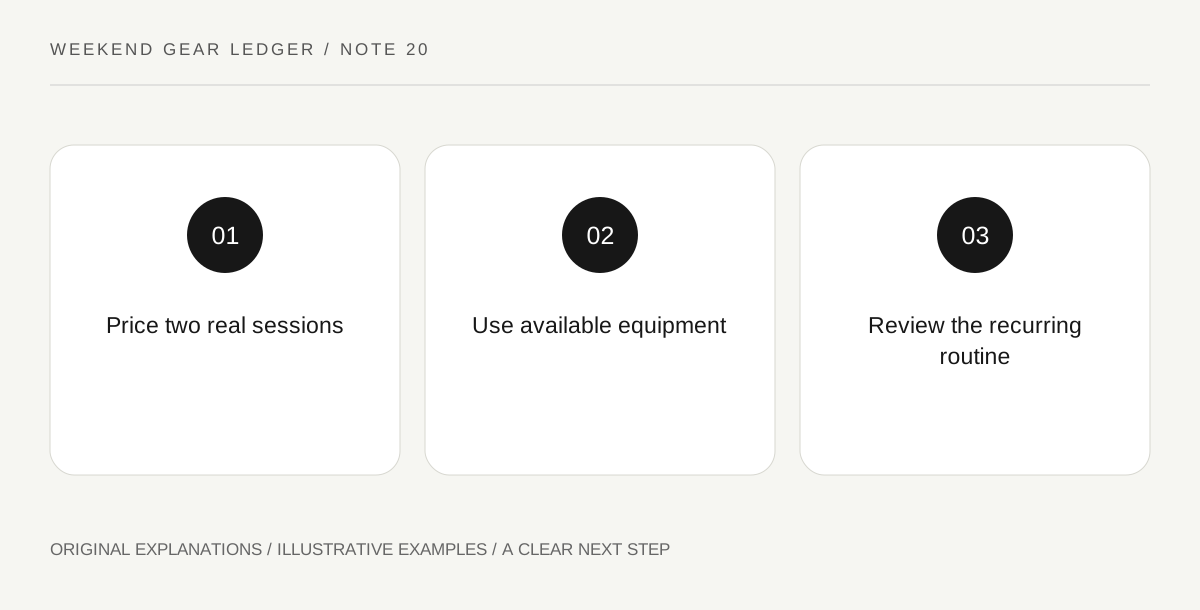
Original explanatory diagram. Read the full method and limitations below.
Define the activity you can actually attend
Choose a specific beginner format rather than an abstract identity such as become an astronomer or take up every outdoor sport. Record the duration, location and equipment policy for two possible sessions. Confirm current details with their organizers. The PDGA’s one-disc starting guidance is one example of how a hobby’s entry requirement can be smaller than a full specialist collection, not a rule that every hobby needs only one object.
Separate ownership from participation cost
Make three lines: unavoidable session costs, equipment supplied or borrowed, and personal purchases required now. Include the journey and any booking conditions in the first line. Write zero only when you have confirmed that there is no charge; leave an unknown as unknown. A low equipment price does not make the entire activity inexpensive if reaching the venue consumes most of your discretionary budget.
Give optional purchases a waiting list
Put attractive accessories on a separate page with the function each would perform. After the first session, ask whether you actually encountered that need. Distinguish an item that enables participation from one that makes packing neater or matches an aesthetic. Both can be legitimate choices, but they should not compete invisibly for the same limited allowance. Avoid funding the trial through promised future resale or unverified income.
Review the second session as a different question
The first session can be novel even when a recurring hobby would be inconvenient. Use the second to test the routine: getting there, resetting equipment and finding space to store it afterward. Record what you liked and what burden remained. A decision not to continue is useful information. It does not require buying an upgrade to justify the time or money already spent on the introduction.
Illustrative worked example
Illustrative example: Jules sets an invented allowance of 60 units for two hobby sessions. Confirmed access and travel total 28, while loan equipment covers the main kit. Jules reserves 12 for a required personal item and leaves 20 unspent until the trial is finished. These are illustrative amounts, not market prices. After the second visit, Jules can decide whether a recurring booking or a personal equipment purchase is the better next use.
Questions that come up
Is the cheapest trial always the best choice?
Choose a suitable, accessible and properly organized introduction. Price is one constraint alongside instruction, permissions, logistics and your actual interest. A cheap session you cannot reasonably attend does not create a useful equipment test.
What if I stop after the first session?
Record what you learned and close any booking or loan obligations. You do not need to recover enthusiasm through another purchase. Keep useful general equipment only if it has an identified purpose beyond the abandoned plan.
References and scope
These sources support the factual background. Examples and exercises are original illustrative teaching material. References do not imply endorsement.
- PDGA: introductory disc golf guide — A beginner can start with one disc; basic equipment roles, not historic prices or course counts.